Product Category

Solar Connector

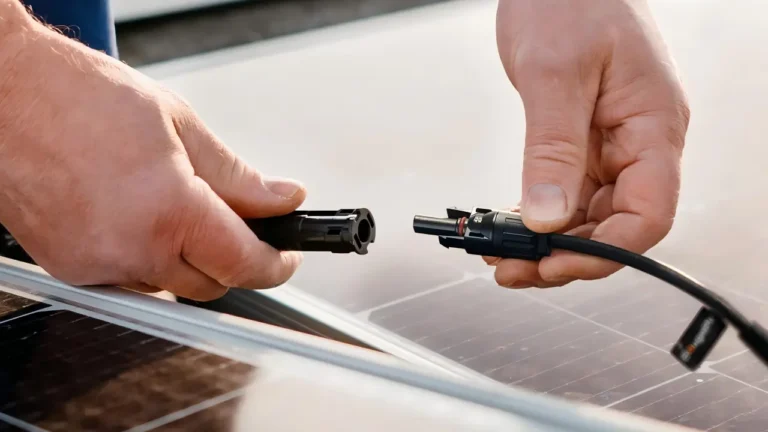
UHCCY solar connectors provide cable-to-cable, panel-mount, branch, fuse-integrated and diode-integrated connection solutions for photovoltaic DC systems. The range includes 1000V and 1500V platforms, selected higher-voltage configurations, and model-specific options for different conductor sizes and current requirements.

  • 1000 V and 1500 V options
  • 2.5–10 mm² cable options
  • Inline and branch configurations
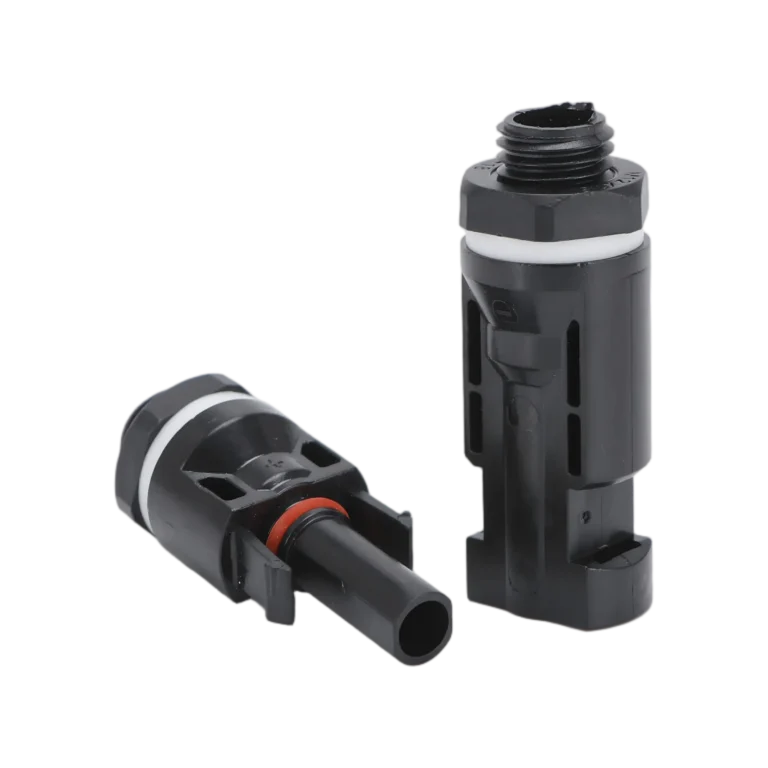
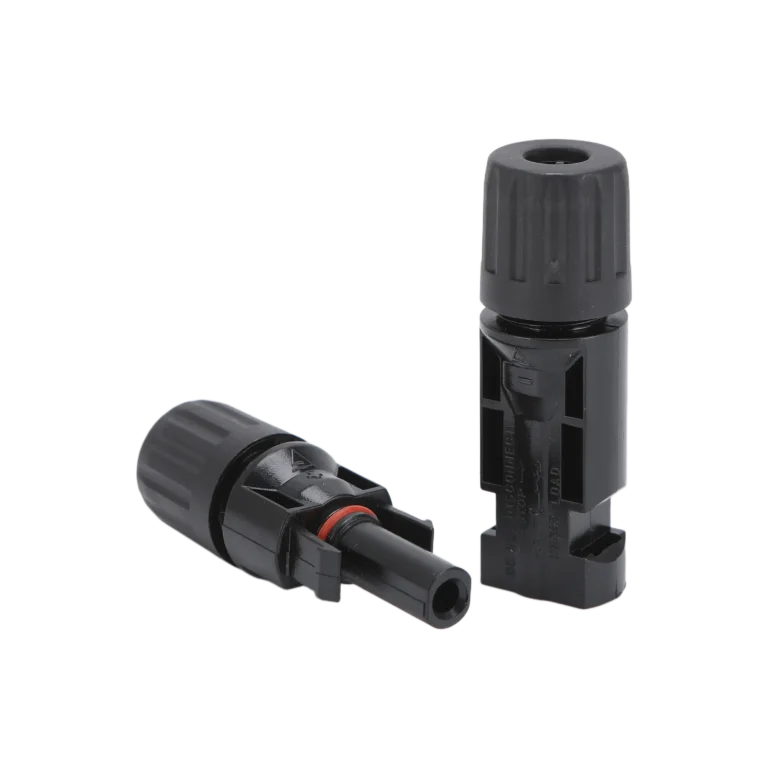
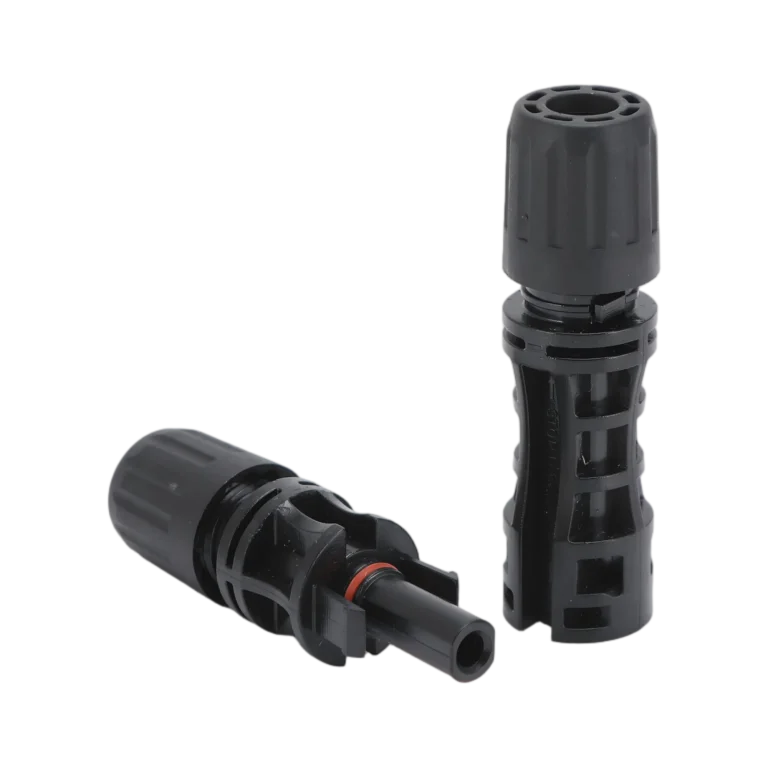
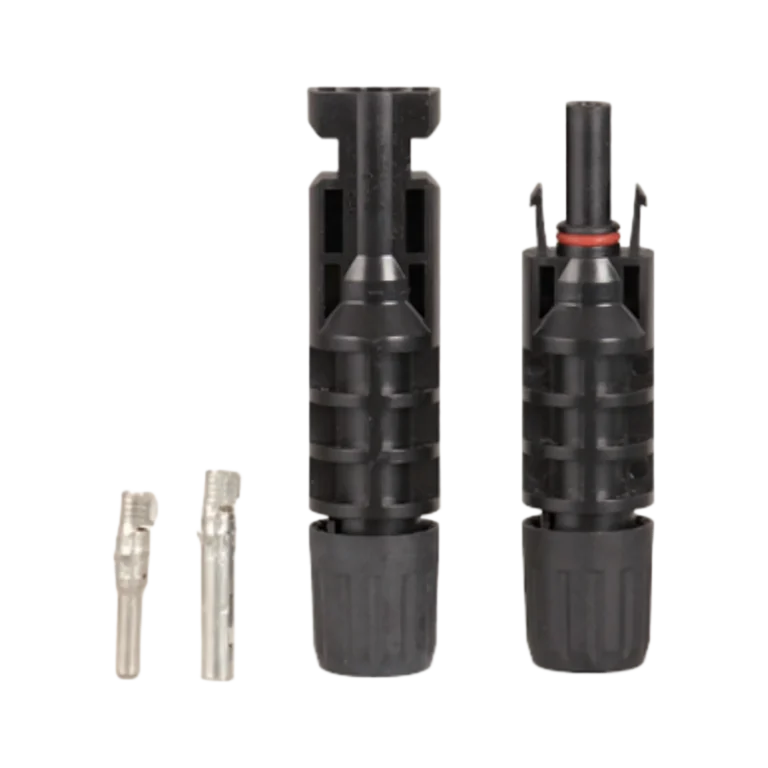
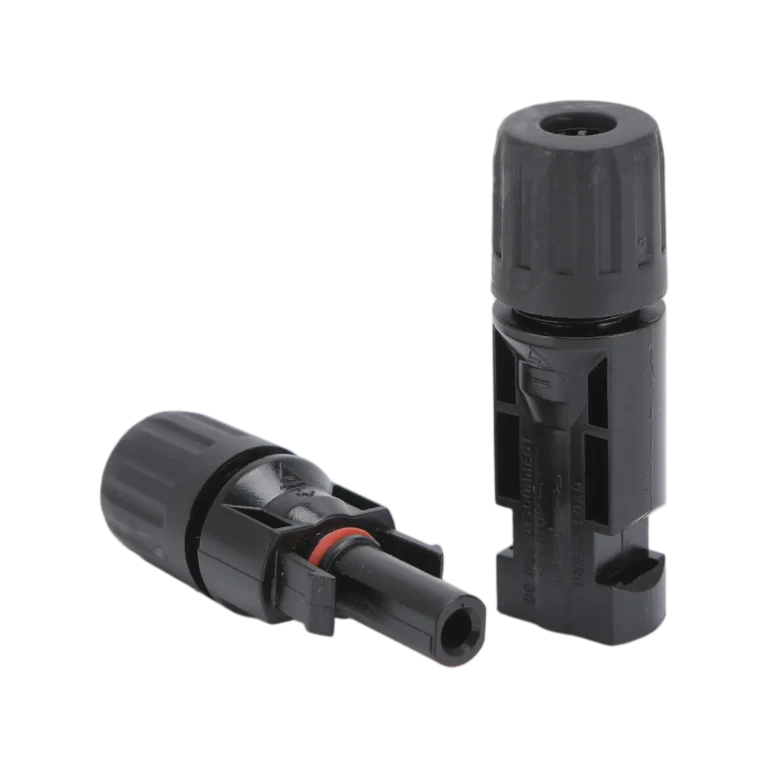
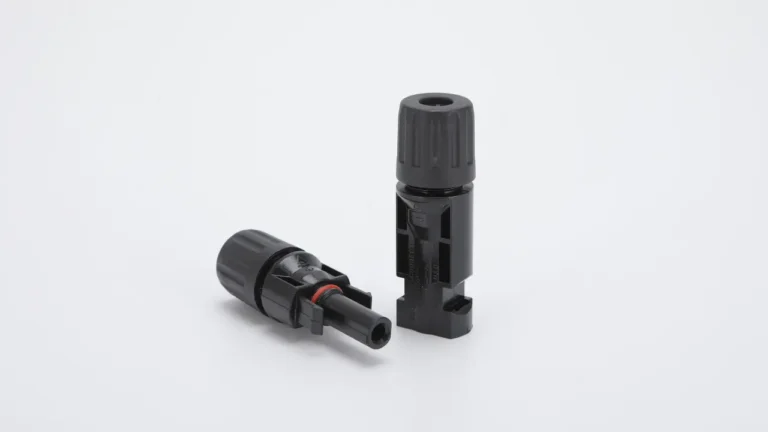
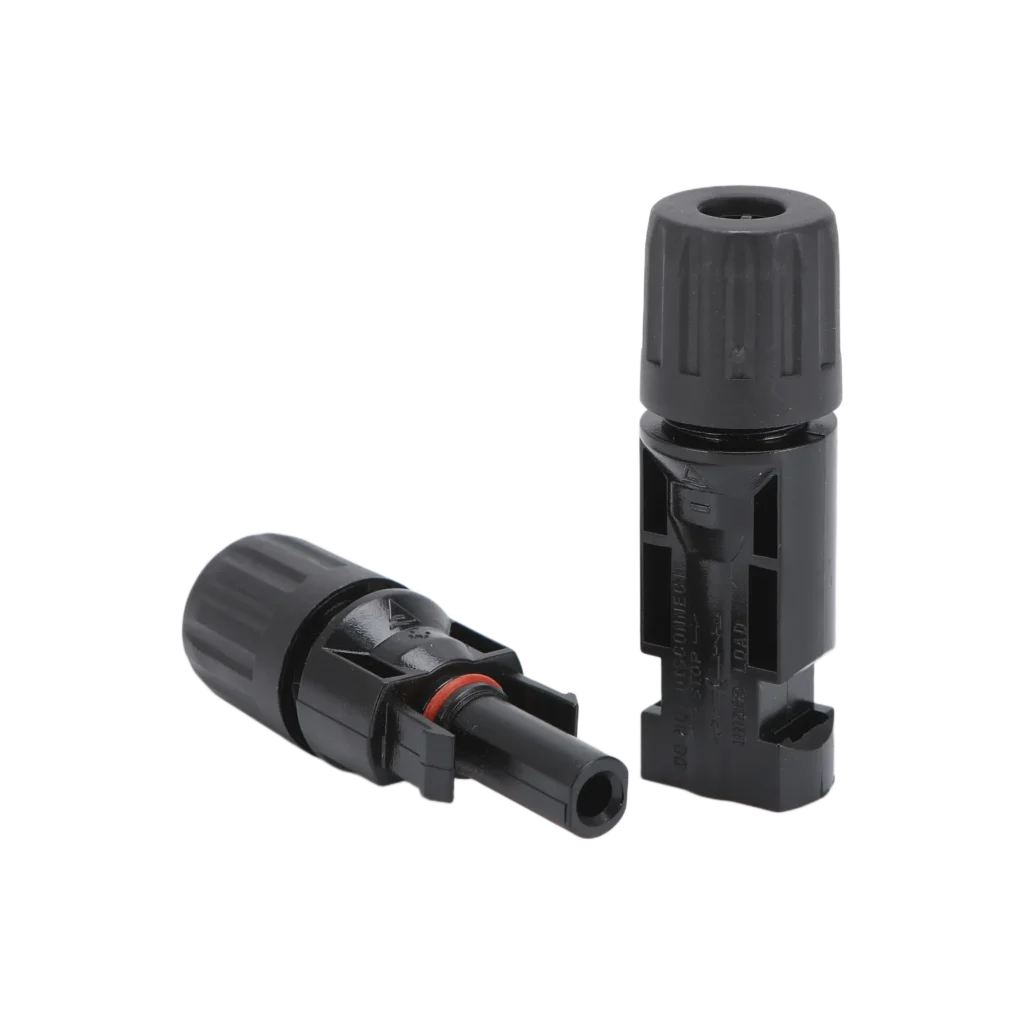
UH-PC-MC01 1000V solar connector pair

Product Range

UHCCY Solar Connector Products

Browse available models here, then use the comparison table below to compare family-level specifications.

Overview

About Solar Connector

UHCCY solar connectors provide reliable PV DC connections with 1000V, 1500V and selected high-voltage solutions for cable, panel and branch applications.

Solar Connectors for Photovoltaic DC Wiring

Solar connectors provide detachable electrical connections between photovoltaic modules, solar cables and DC-side equipment. Their role extends beyond simply joining two conductors: the connector system must maintain electrical contact, mechanical retention, insulation, environmental sealing and polarity control throughout installation and service.

UHCCY solar connectors are therefore organized as a product family rather than a single universal connector. Different platforms are selected according to system voltage, required current, conductor cross-section, cable outer diameter, installation location and connector architecture.

For complete cable assemblies, the connector should be selected together with the appropriate Solar Cable rather than choosing the connector based only on current rating.
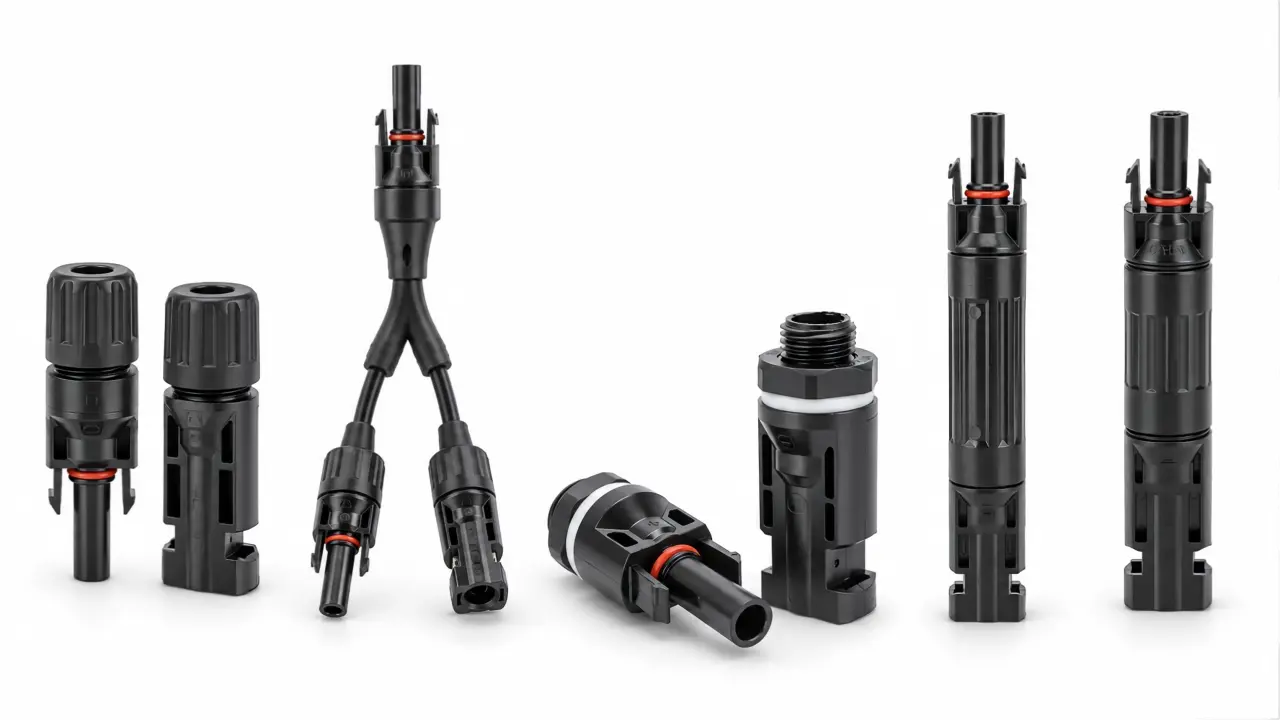
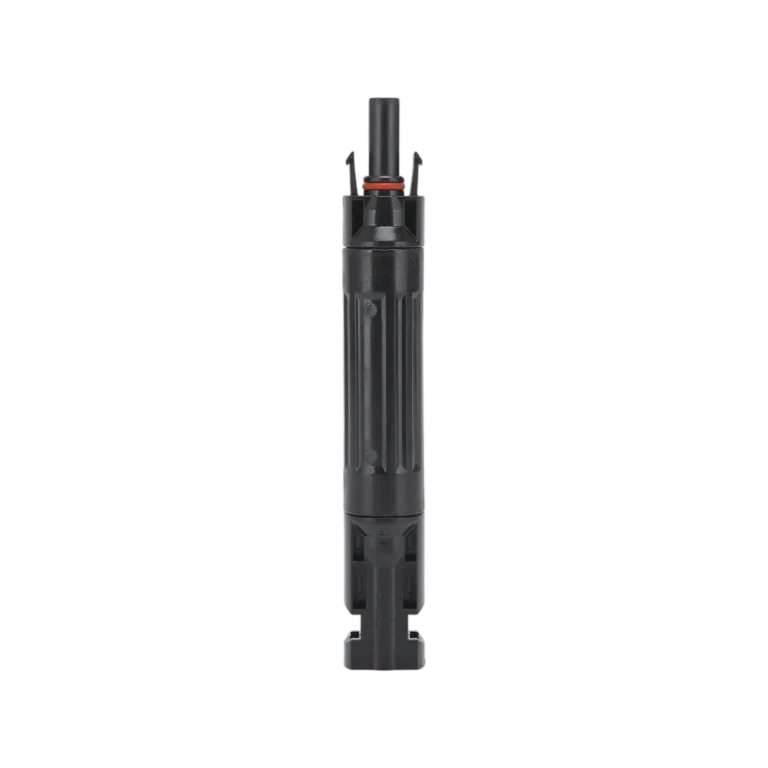
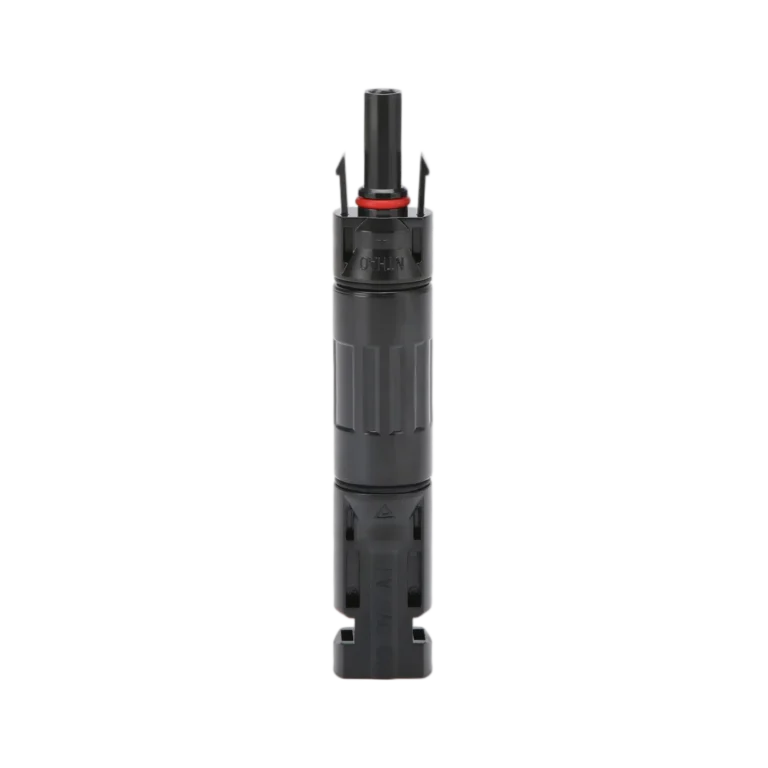
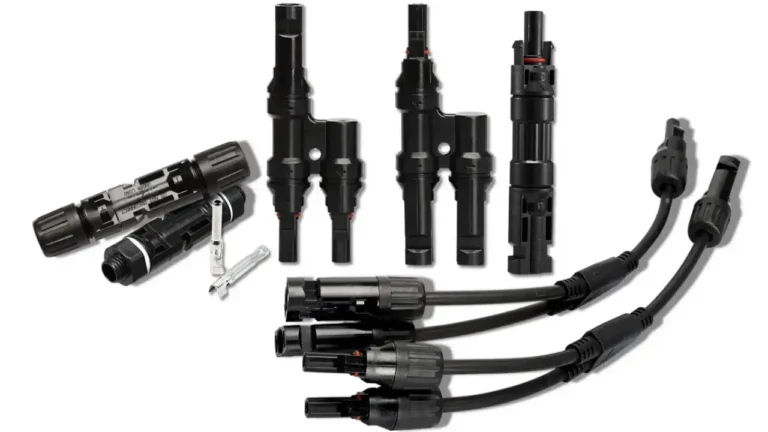
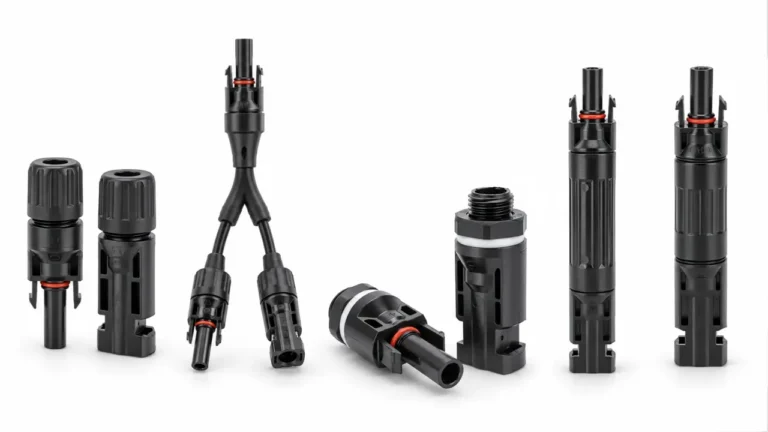
MC4 connector types including inline branch panel-mount fuse and diode PV connectors

Solar Connector Product Families

The UHCCY range includes several connector architectures for different positions within a photovoltaic DC system.

Cable-to-cable solar connectors provide the standard detachable connection between PV cables and are available across several voltage, current and conductor configurations.

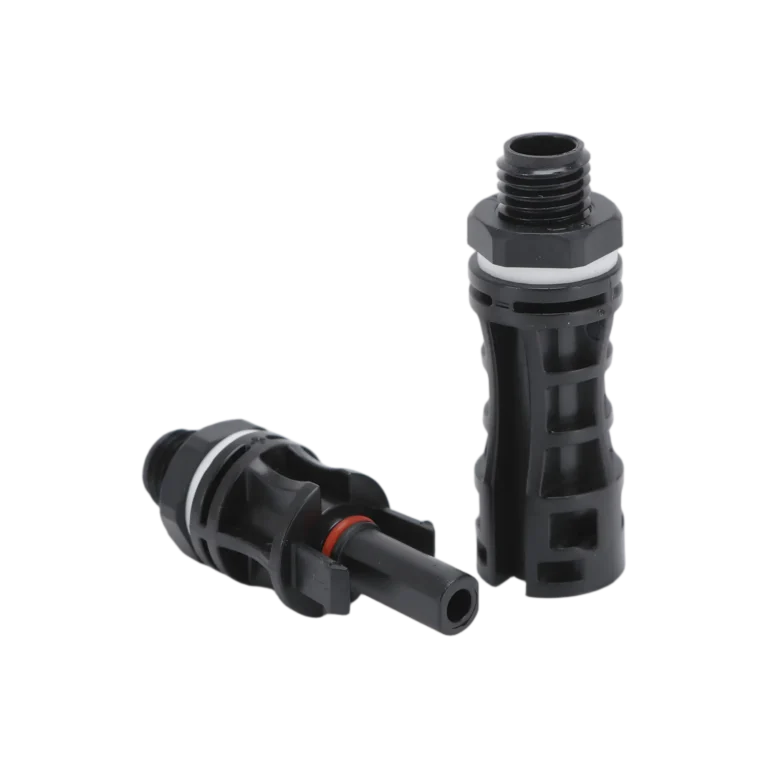
Panel-mount solar connectors provide a fixed connection point through an enclosure or equipment panel and are suitable for applications where the connector interface must be mechanically integrated into equipment.

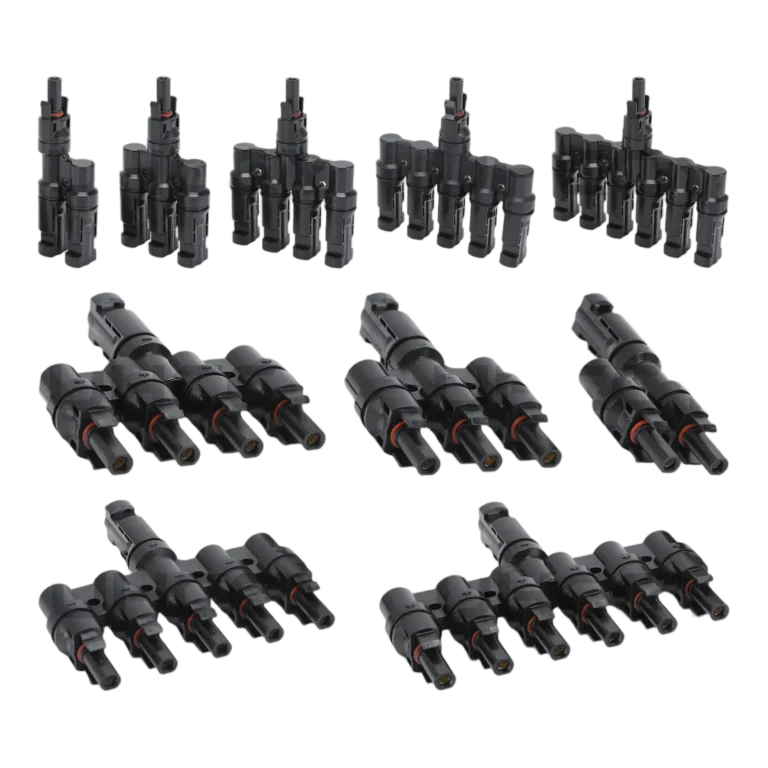
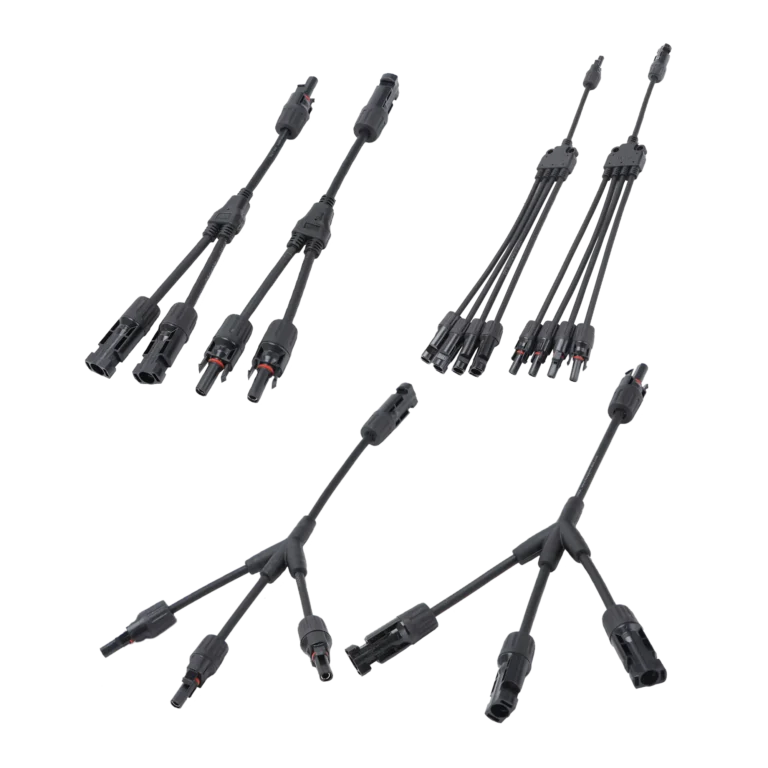
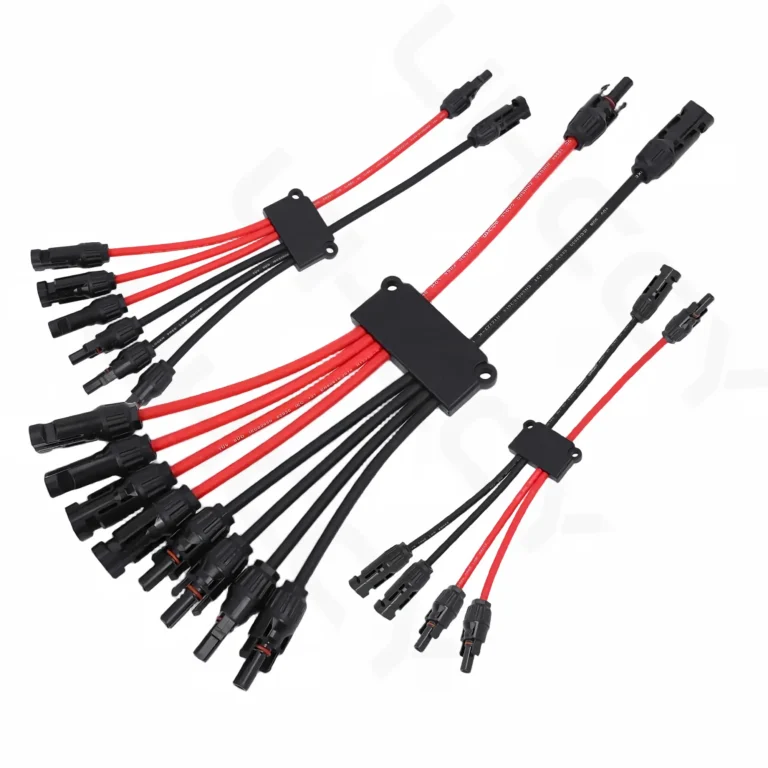
Branch solar connectors combine or distribute PV circuits using predefined branch arrangements. The actual input/output configuration must be selected according to the specific branch model rather than assuming all Y- or multi-branch products are electrically identical.

Fuse-integrated solar connectors combine a PV connection interface with fuse protection in applications where an integrated configuration is appropriate.

Diode-integrated solar connectors incorporate a diode function into the connector assembly, with current-specific versions selected according to the intended circuit.

This architecture allows the category page to explain common selection logic while individual product pages retain exact dimensions, ratings and configuration-specific data.

Voltage, Current and Cable Size Must Be Selected Together

A connector should never be selected from one headline specification alone.

For example, a nominal current value only has meaning when considered together with:

connector platform → contact design → conductor cross-section → cable outer diameter → system voltage → installation condition.

Across the UHCCY range, current-specific variants such as 30A, 45A, 50A and 60A are treated as distinct configurations rather than being collapsed into a generic “30–60A” specification.

Likewise, 2.5 mm², 4 mm², 6 mm² and 10 mm² cable configurations must be matched to the appropriate contact and cable sealing range.

For a more detailed explanation of the relationship between voltage, current and cable size, the existing solar connector specifications guide can provide the deeper technical layer while this category page remains focused on product selection.

Connector Mating and Compatibility

PV connectors should not be treated as universally interchangeable simply because two products appear mechanically similar.

Current standards and manufacturer guidance emphasize using connector pairs evaluated as a defined mating system. UL 6703 specifically evaluates PV connectors with compatible mating parts, and its current scope states that mating parts are generally to be of the same brand unless manufacturers jointly submit a combination for evaluation.

UHCCY should therefore describe its products according to the UHCCY connector platform and approved mating pair, rather than making broad claims such as “universal compatible connector.”

About the Term “MC4 Connector”

“MC4” is not the generic technical name for every photovoltaic connector. It refers to Stäubli's Original MC4 product family.

Because the term has become widely used informally in the solar market, customers may still encounter searches or discussions using phrases such as “MC4 connector.” On UHCCY product and category pages, however, the correct generic terminology is Solar Connector or PV Connector.

UHCCY products should not be presented as Original MC4 products or as universally interchangeable with Stäubli connectors. Stäubli explicitly advises against cross-mating connectors from different manufacturers and states that it does not recognize third-party products advertised as MC4 compatible.

Key Advantages

Why Choose UHCCY Solar Connector

1000 V and 1500 V options
2.5–10 mm² cable options
Inline and branch configurations

Multiple Voltage Platforms

1000V and 1500V solar connector platforms are available, with selected higher-voltage configurations for specific product families.

Current-Specific Configurations

Individual connector variants are available for different current requirements rather than treating a wide current range as one interchangeable specification.

Multiple Cable Sizes

Applicable models support common photovoltaic conductor sizes including 2.5, 4, 6 and 10 mm², depending on connector platform and contact design.

Multiple Connector Architectures

The range includes cable-to-cable, panel-mount, branch, fuse-integrated and diode-integrated solar connector configurations.

Tinned Copper Contacts

Tin-plated copper contacts are the standard UHCCY configuration, with silver-plated copper available for selected requirements.

OEM & Project Supply

Connector configuration, cable compatibility, packaging and related assembly requirements can be coordinated for wholesale and OEM projects.

Model Selection

Products & Comparison

Compare the main family-level parameters, then open a model for its complete specifications and inquiry details.

ModelRated VoltageRated CurrentConfigurationCable SizeContact Material
UH-PC-MC011000V Solar Connector for 2.5 – 6 mm² PV Cable – UH-PC-MC01 1000V DC30A ~ 50AInline connector2.5 ~ 6 mm² / 14 ~ 10 AWGTin-Plated Copper
UH-PC-MC02Compact 1000V Solar Connector for 2.5, 4 & 6 mm² PV Cable – UH-PC-MC02 1000V DC30A ~ 50AInline Connector2.5 ~ 6 mm² / 14 ~ 10 AWGTin-Plated Copper
UH-PC-PM011000V Panel-Mount Solar Connector – UH-PC-PM01 1000V DC30AInline Connector4 mm² / 12 AWGTin-Plated Copper
UH-PC-PM021500V Panel-Mount Solar Connector for 2.5, 4 & 6 mm² PV Cable – UH-PC-PM02 1500V DC30A ~ 50AInline Connector2.5 ~ 6 mm² / 14 ~ 10 AWGTin-Plated Copper
UH-PC-MC041500V High-Current Solar Connector up to 60A – UH-PC-MC04 1500V DC30A ~ 60AInline Connector2.5 ~ 16 mm² / 14 ~ 6 AWGTin-Plated Copper
UH-PC-MC052000V Solar Connector for High-Voltage PV Systems – UH-PC-MC05 2000V DC30A ~ 60AInline Connector2.5 ~ 16 mm² / 14 ~ 6 AWGTin-Plated Copper
UH-PC-TB011000V T-Branch Solar Connector – 2-to-1 to 6-to-1 – UH-PC-TB01 1000V DC30AT-Branch Connector4 mm² / 12 AWGTin-Plated Copper
UH-PC-YB011000V Y-Branch Solar Connector – 2-to-1, 3-to-1 & 4-to-1 – UH-PC-YB01 1000V DC30AY-Branch Connector4 mm² / 12 AWGTin-Plated Copper
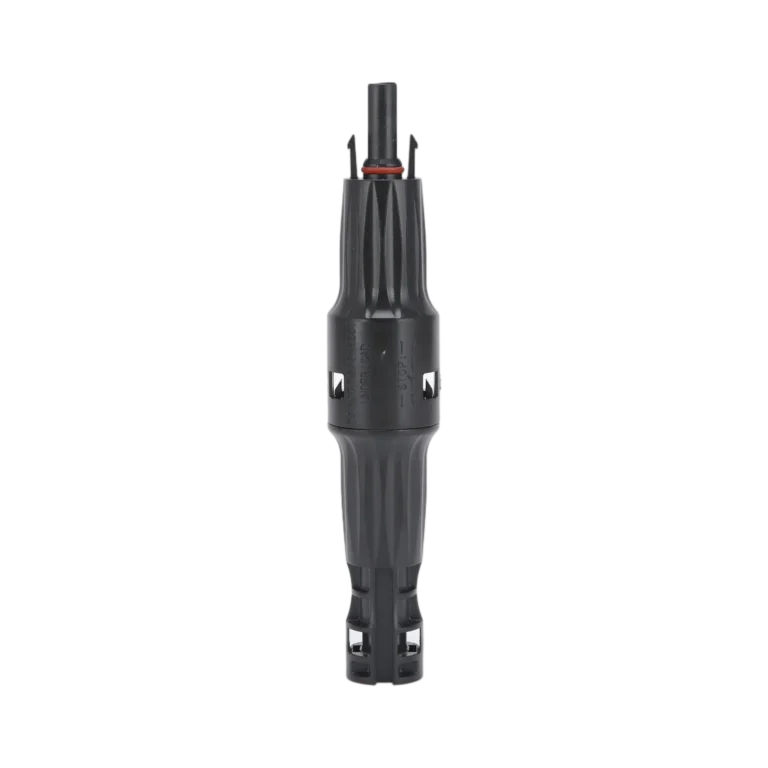
UH-PC-MF011000V Inline Fuse Solar Connector for 10 × 38 mm PV Fuse – UH-PC-MF01 1000V DCInline Connector4 mm² / 12 AWGTin-Plated Copper
UH-PC-MF021500V Inline Fuse Solar Connector for 10 × 85 mm PV Fuse – UH-PC-MF02 1500V DCInline Connector4 mm² / 12 AWGTin-Plated Copper
UH-PC-MD011000V Inline Solar Diode Connector for Reverse-Current Protection – UH-PC-MD01 1000V DC10A ~ 30AInline Connector4 mm² / 12 AWGTin-Plated Copper

Technical Data

Solar Connector Specifications

The specifications below describe the available UHCCY solar connector range. Exact ratings, cable dimensions, protection levels and certification status vary by model.

Electrical Characteristics

ParameterAvailable Range / Configuration
Product TypePhotovoltaic DC Connector
Rated Voltage1000V DC / 1500V DC / selected higher-voltage models
Rated Current30A / 45A / 50A / 60A, model dependent
Conductor Cross-Section2.5 / 4 / 6 / 10 mm², model dependent
Connector ArchitectureCable-to-Cable / Panel-Mount / Branch / Fuse / Diode
Contact MaterialCopper
Standard Contact PlatingTin-Plated Copper
Optional Contact PlatingSilver-Plated Copper, selected configurations
Connection MethodCrimp connection for applicable cable connectors
Cable Outer DiameterModel dependent
PolarityPositive / Negative mating pair
Ingress ProtectionAccording to individual model specification
Operating TemperatureAccording to individual model specification
Applicable Connector StandardIEC 62852 for applicable ≤1500V connector models
OEM ConfigurationAvailable according to project requirements

Selection Guide

How to Choose a Solar Connector

Correct connector selection starts with the PV system rather than the connector appearance.

1. Determine the Connection Configuration

First identify what the connector needs to do.

Choose between:

  • standard inline connection;
  • extension cable connection;
  • two or more string branch connection;
  • fused string connection;
  • diode-integrated connection;
  • or another application-specific configuration.

For ordinary module and string wiring, a standard male/female connector pair is normally the starting point.

2. Check the Maximum DC System Voltage

Confirm the maximum voltage that can occur in the PV string under the expected operating and environmental conditions.

The connector rated voltage must be suitable for that system voltage.

Do not substitute a lower-voltage connector into a higher-voltage PV architecture.

3. Check the Required Current Rating

Connector current rating must be suitable for the current carried by the circuit.

For branch connectors, pay particular attention to the current after multiple strings are combined.

The connector, output cable and downstream equipment must all be appropriately rated.

4. Match the PV Cable

Check both:

Cable conductor cross-section
and
Cable outer diameter

A connector that accepts the conductor electrically may still be unsuitable if the cable outer diameter does not match the sealing system.

Common-looking PV cables can have different insulation thicknesses and outer diameters.

5. Confirm Connector Mating Compatibility

Use the specified mating pair from the same connector system.

Do not assume that connectors from two manufacturers are compatible simply because they can physically plug together.

For existing PV systems, identify the original connector manufacturer and model before replacing or extending the connection.

6. Check Installation Environment

Consider:

  • outdoor exposure;
  • temperature;
  • UV;
  • moisture;
  • dust;
  • installation position;
  • cable movement;
  • mechanical load;
  • and project-specific environmental conditions.

The relevant product ratings must match the actual application.

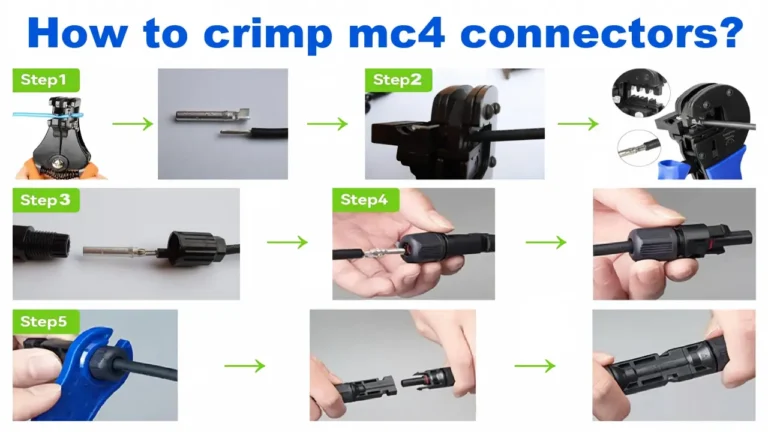
7. Use the Correct Crimping and Assembly Tools

Connector contacts require consistent conductor preparation and crimping.

Use the specified crimping die and assembly tools for the selected connector and cable.

Incorrect stripping, crimping or sealing can compromise both electrical and environmental performance.

Use Cases

Solar Connector Applications

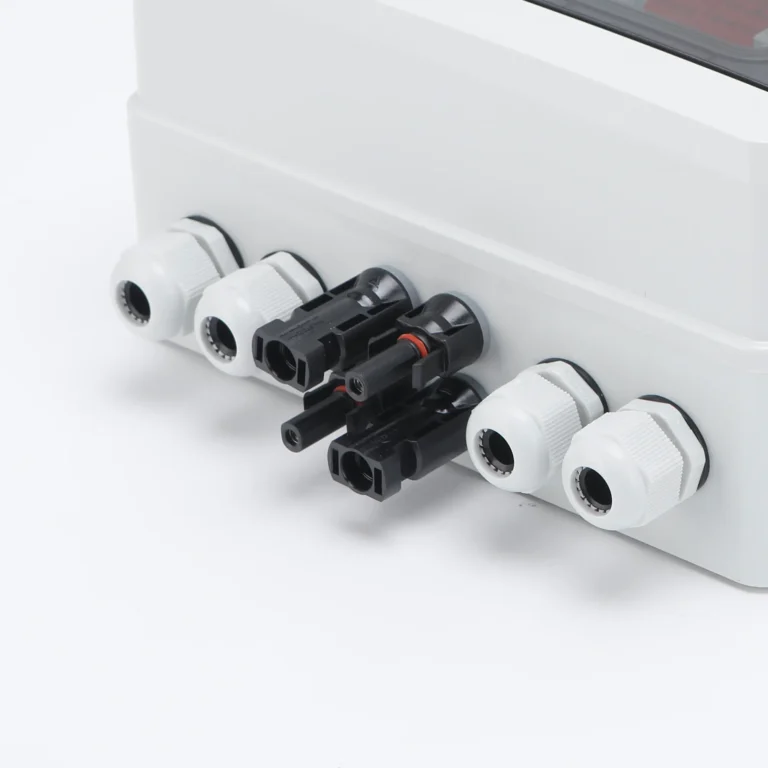
UH-PC-PM01 connector mounted through an equipment panel

PV Combiner Boxes

Connector assemblies support DC cable connections between PV strings, combiner equipment and inverter inputs.

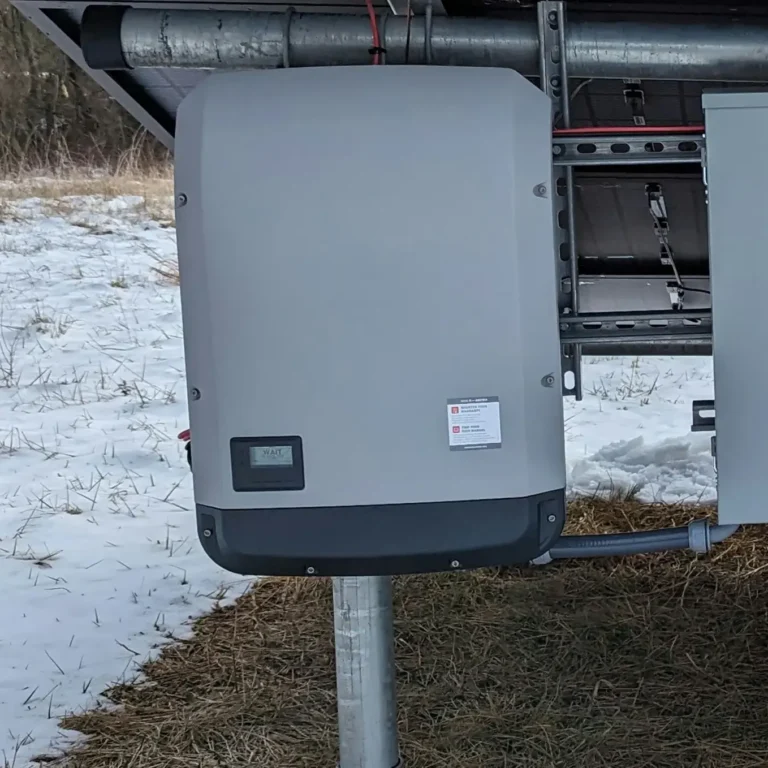
Solar Inverters

Solar Inverters

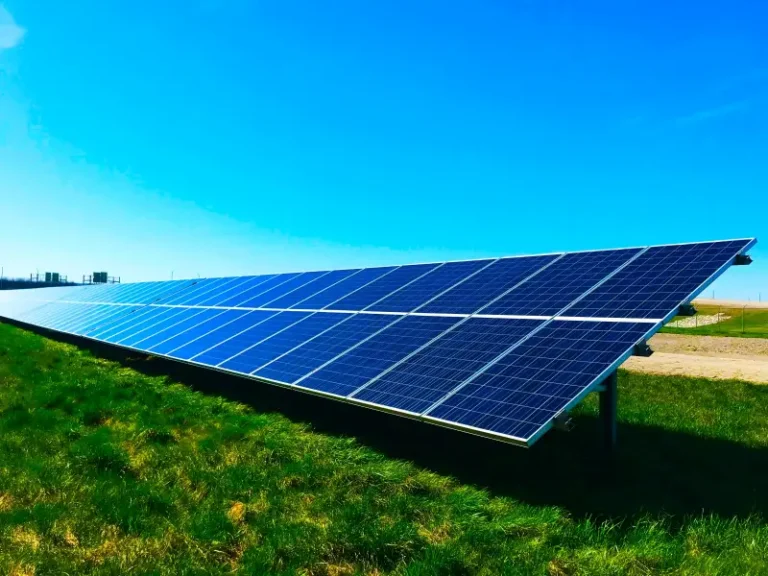
Solar PV Systems

Solar PV Systems

Protection, connectivity and distribution components for photovoltaic arrays, string circuits and related solar DC systems.

Installation

Installation & Compatibility

Solar connectors should be installed using the cable, contact, crimping tool and connector components specified for the exact product family.

Cut and strip the solar cable according to the connector assembly requirements without damaging conductor strands.

Use a compatible crimping tool and die for the selected contact and conductor size. UHCCY installation tools are available through PV Connector Tools.

After crimping, inspect the contact position and mechanical retention before inserting it into the connector housing.

Ensure the contact reaches the intended locking position inside the housing before completing cable-gland assembly.

Tighten connector components according to the requirements of the specific model. Do not assume one torque value applies to every UHCCY solar connector.

Confirm that the cable outer diameter is within the connector sealing range.

Male and female connectors should be used as the approved mating pair from the same connector family.

Do not cross-mate UHCCY connectors with connectors from another manufacturer merely because the interfaces appear mechanically similar. Stäubli and current PV connector standards both highlight the safety and certification risks associated with cross-mating products from different connector systems.

PV DC circuits can remain energized whenever modules are exposed to light. Connectors should not be assembled, disconnected or serviced under load unless the specific system design and instructions explicitly permit the operation.

For a full assembly procedure, refer to the existing PV connector crimping guide and PV connector wiring guide.

Compliance

Certifications & Standards

Applicable Standards

The principal international product standard for photovoltaic DC connectors is IEC 62852:2014+A1:2020 — Connectors for DC-application in photovoltaic systems — Safety requirements and tests.

The standard covers PV DC connectors with rated voltages up to 1,500 V DC and rated currents up to 125 A per contact within its scope.

PV connector installation should also be considered within the wider photovoltaic array design requirements of IEC 62548-1:2023+A1:2025, which covers DC array wiring and other PV array design requirements.

IEC TR 63225:2019 specifically addresses incompatibility issues involving photovoltaic DC connectors produced by different manufacturers and reinforces the importance of correct connector-system selection.

Depending on the destination market and individual UHCCY model, additional certification or qualification requirements may apply.

TÜV, UL, CE or other certification statements should only be shown for the exact connector models covered by the corresponding documentation.

Certification of one UHCCY MC4 connector should not automatically be interpreted as certification of every model within the complete product family.

FAQ

Frequently Asked Questions

Common technical and purchasing questions about this product category.

What is a solar connector?

A solar connector is a purpose-designed electrical connector used for DC connections in photovoltaic systems. It typically connects PV modules, solar cables, branch circuits, equipment panels, combiner systems or inverter-side wiring.

The exact voltage, current, conductor size, sealing and mating requirements depend on the individual connector model.

Is a solar connector the same as an MC4 connector?

Not exactly.

Solar connector or PV connector is the generic product category.

MC4 refers specifically to Stäubli's Original MC4 connector family. The term is frequently used informally in the market, but not every solar connector is an MC4 product.

What is the difference between 1000V and 1500V solar connectors?

The main difference is the maximum system voltage for which the connector platform is designed and evaluated.

A 1500V connector system may require different insulation distances, housing dimensions, contact structures or sealing arrangements than a 1000V product.

Voltage rating should therefore be verified from the exact connector specification rather than inferred from appearance.

How do I choose the correct solar connector current rating?

Select the current rating together with the conductor cross-section, contact design, system voltage and installation conditions.

UHCCY provides current-specific connector variants such as 30A, 45A, 50A and 60A, depending on the product family.

Do not replace one current-specific contact configuration with another solely because the housings look similar.

More detailed electrical parameters are covered in the [solar connector specifications guide](https://uhccy.com/mc4-connector-specifications/).

What cable sizes are available for UHCCY solar connectors?

Applicable models cover common photovoltaic conductor sizes including 2.5, 4, 6 and 10 mm².

Compatibility should be confirmed using both conductor cross-section and finished cable outer diameter.

For matching cable options, refer to [Solar Cable](https://uhccy.com/solar-cable/).

Can I connect solar connectors from different manufacturers?

They should not be assumed interchangeable.

Connector systems from different manufacturers can differ in contact geometry, material, tolerances, sealing and mating interface even when they appear visually similar.

Use the approved mating pair specified for the connector system rather than relying on broad “compatible” claims. Stäubli explicitly advises against third-party cross-mating, while UL 6703 evaluates connectors with defined compatible mating parts.

What is the difference between tin-plated and silver-plated contacts?

Tin-plated copper is the standard UHCCY contact configuration.

Silver-plated copper may be available for selected requirements.

The appropriate plating option depends on the actual connector design and project requirements and should not be treated as an interchangeable specification without confirmation.

Do solar connectors need special crimping tools?

Crimp-type solar connectors should be assembled using a crimping tool and die suitable for the contact and conductor size.

General-purpose pliers do not provide controlled crimp geometry.

UHCCY provides compatible cable preparation and crimping equipment through [PV Connector Tools](https://uhccy.com/pv-connector-tools/).

The detailed procedure is covered in the [PV connector crimping guide](https://uhccy.com/how-to-crimp-mc4-connectors/).

Are all UHCCY solar connectors IP67 or IP68?

Do not assume one ingress-protection rating applies to the complete category.

IP rating depends on the connector model, assembly condition, sealing components and proper cable compatibility.

The exact ingress-protection rating should therefore be taken from the individual product specification.

Need Reliable Solar Connector?

Contact UHCCY for model selection, technical specifications, OEM/ODM requirements, samples, and quotations.

Get A Quote