Table of Contents
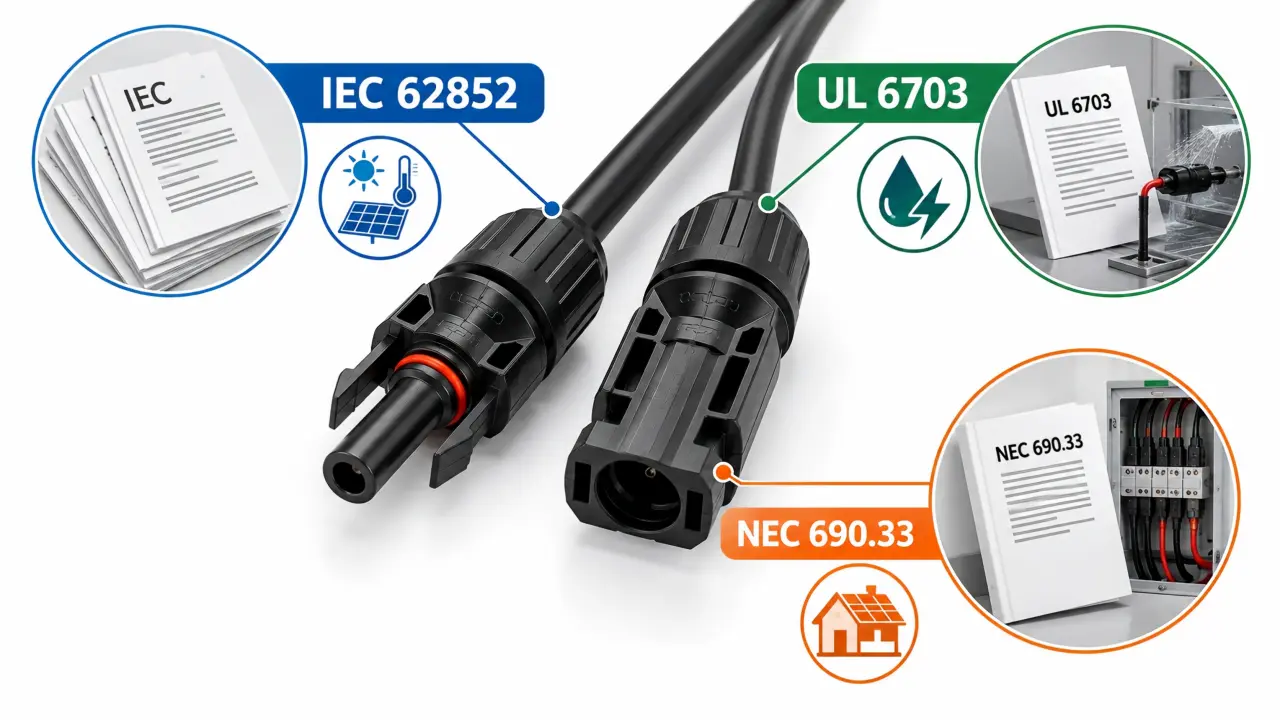
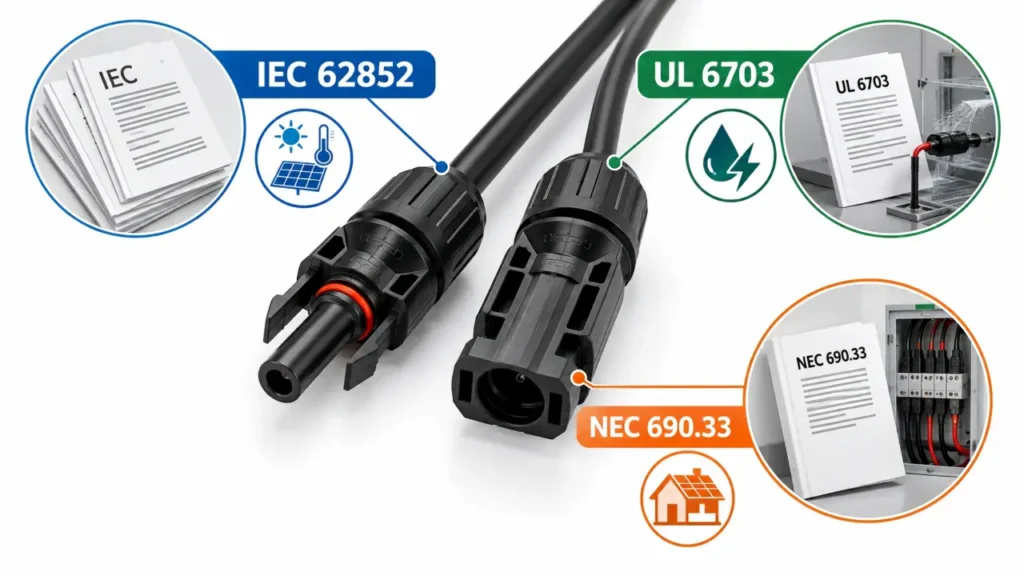
Understanding MC4 connector standards is more complicated than checking whether a datasheet contains an IEC, UL, TÜV or CE logo.
Those terms do not mean the same thing.
A technical standard defines requirements and test methods. A certification demonstrates that a defined product has been evaluated within a specific scope. An electrical code governs how products can be installed in a particular jurisdiction. A conformity mark can serve another legal purpose entirely.
For PV connector purchasing, the useful question is therefore not:
“Does this connector have certification?”
It is:
“Which exact model was evaluated, to which standard, at which ratings, with which cable/contact configuration and mating counterpart?”
UHCCY uses Solar Connector and PV Connector for its own products.
For connector specifications before compliance questions, see MC4 Connector Specifications.
MC4 Standards, Certification, Codes and Marks Are Different
These terms are often mixed together in supplier catalogs.
| Term | What it means | Example |
|---|---|---|
| Product standard | Defines technical requirements and tests | IEC 62852 |
| Safety standard / certification basis | Used to evaluate products for a market | UL 6703 |
| Electrical installation code | Defines installation requirements | NEC Article 690 |
| Certification body | Organization that performs assessment/certification | TÜV, UL Solutions and others |
| Conformity marking | Indicates conformity with applicable legal requirements | CE where applicable |
| Material/environmental requirement | Controls substances or materials | RoHS |
This distinction matters because statements such as:
“TÜV standard”
or:
“CE certified according to IEC”
can combine several different concepts into one unclear claim.
Professional documentation should identify each separately.
IEC 62852: The Main International PV Connector Standards
IEC 62852 is titled:
Connectors for DC-application in photovoltaic systems — Safety requirements and tests
The current consolidated IEC publication is IEC 62852:2014+A1:2020.
Its scope includes PV DC connectors with rated voltages up to 1500 V DC and rated currents up to 125 A per contact.
Official standard information is available from the IEC 62852 publication page.
The most important thing to understand is that these values define the scope of the standard.
They do not mean:
IEC 62852 connector = 1500 V / 125 A
An individual connector may instead be rated:
1000 V / a specified current
or:
1500 V / a specified current
depending on the exact product and evaluated configuration.
A supplier should therefore never copy the upper limits of IEC 62852 into its own product specifications unless the actual product documentation supports those ratings.
What IEC 62852 Actually Evaluates
PV connectors operate outdoors for long periods under electrical, thermal and environmental stress.
A connector standard therefore needs to evaluate more than whether electricity passes through a newly assembled sample.
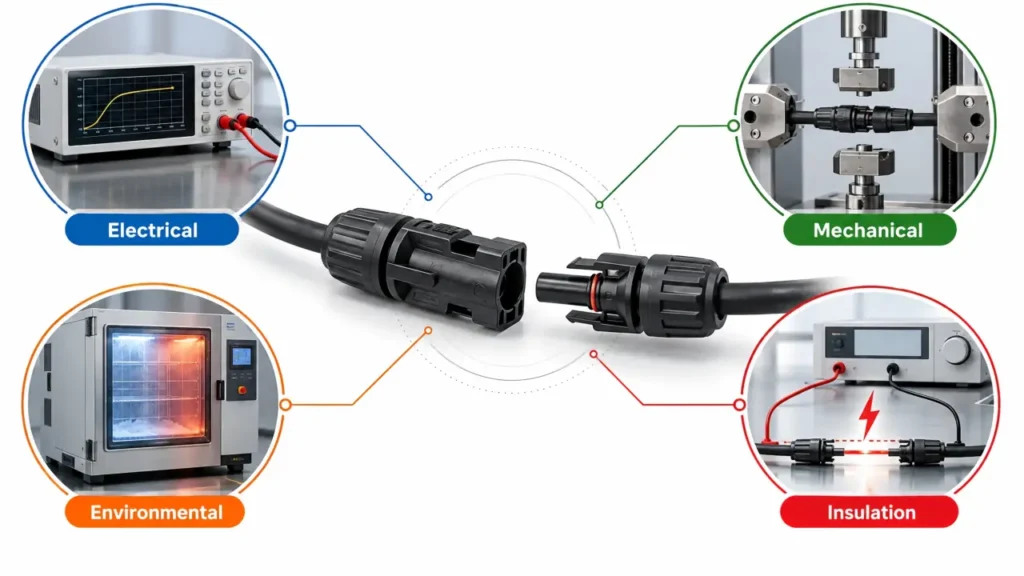
Depending on the applicable test requirements, connector evaluation can include areas such as:
- electrical performance
- mechanical strength
- insulation performance
- temperature behavior
- environmental exposure
- connector retention
- cable termination
- ingress protection
- durability
- material performance
For buyers, this creates an important distinction:
A specification measured on one new sample is not equivalent to successful qualification under a product standard.
For example, measuring low contact resistance once does not prove how the connection behaves after environmental or mechanical testing.
UL 6703 for the North American Market
For the United States and other projects using North American certification requirements, UL 6703 — Connectors for Use in Photovoltaic Systems is an important standard.
The current UL 6703 listing is active, with its latest published revision dated June 25, 2024.
Its scope covers latching or locking PV connectors, including free connectors and fixed/panel-mounted configurations, with connector ratings up to 1500 V AC or DC.
The current standard information can be reviewed on the UL 6703 official standard page.
The 2024 revision is particularly relevant because it included changes involving:
- assembly procedures for field-assembled connector test samples
- cyclic pull testing
- low-temperature impact test conditions
- permitted cable requirements
This reflects an important industry direction:
connector qualification increasingly considers the assembled cable/contact/connector system rather than only the plastic housing.
That aligns closely with the selection principle used throughout UHCCY’s connector guides.
What Is UL 62852?
Buyers may also encounter UL 62852.
This should not automatically be confused with UL 6703.
UL 62852 is the U.S. adoption of the IEC-based connector standard and incorporates U.S. national differences.
It was published by UL Standards & Engagement in 2022.
This means North American connector documentation may refer to:
UL 6703
or:
UL 62852
depending on the product evaluation route.
The practical purchasing lesson is not to assume that:
“UL certified”
is a sufficiently complete specification.
Ask for:
standard number → certificate/listing → exact product model → ratings covered.
Passing the Same Standard Does Not Make Two Connectors Interchangeable
This is one of the most important points in the entire article.
Suppose:
Connector A is evaluated to IEC 62852
and:
Connector B is also evaluated to IEC 62852.
That does not automatically mean:
A plug + B socket = approved connection.
The standard does not create one universal dimensional interface for every photovoltaic connector.
UL 6703 is particularly explicit about this concept: compatible mating parts are evaluated as defined combinations, with cross-manufacturer intermatability requiring the relevant products to be submitted and evaluated accordingly.
Therefore:
same standard ≠ same connector interface
and:
same voltage rating ≠ approved cross-mating.
For the full compatibility issue, see MC4 Connector Compatibility.
NEC 690.33: Product Approval Is Not the End of the Story
A product standard answers:
How is this connector evaluated?
The National Electrical Code addresses another question:
How can PV mating connectors be installed in the United States?
Article 690 contains requirements relevant to PV DC mating connectors.
These include concepts such as:
- polarized configuration
- guarding against inadvertent contact
- latching or locking construction
- tool requirements in applicable accessible installations
- intermatability
- current-interruption limitations
The current edition of NFPA 70 is the 2026 NEC.
The official current edition can be accessed from the NFPA 70 National Electrical Code page.
This distinction matters for international suppliers.
Having a product test report does not by itself answer every installation-code question for a U.S. project.
What Changed in the 2026 NEC for PV Connector Intermatability?
The 2026 NEC made an important change to Section 690.33(C).
Where mating connectors are not of identical type and brand, the intermatability relationship now needs to be documented by both manufacturers.
This is stronger than treating one supplier’s statement that:
“Our connector is compatible with Brand X.”
as sufficient on its own.
For a buyer or installer, that creates a much clearer rule:
Cross-brand compatibility is a two-product relationship, so the documentation also needs to support the relationship from both sides.
This is especially important for:
- module-level electronics
- replacement connectors
- inverter leads
- rapid shutdown equipment
- modules arriving with factory-installed connectors
- long-term field maintenance
It also reinforces why UHCCY should not use unsupported blanket terms such as:
“compatible with all MC4 connectors.”
Certification Belongs to an Exact Product Configuration
A certificate should not be treated as a company-wide badge.
Imagine a supplier manufactures ten connector models.
One product has completed a particular certification.
That does not automatically mean all ten models have the same certification.
The certificate normally has a defined scope that can include:
- manufacturer
- product family
- model numbers
- voltage rating
- current rating
- conductor sizes
- cable ranges
- mating components
- applicable standard
- revisions or construction details
For purchasing, compare these details with the product being quoted.
A useful rule is:
If the model you are buying cannot be found within the applicable certification scope, do not assume the logo on the catalog proves coverage.
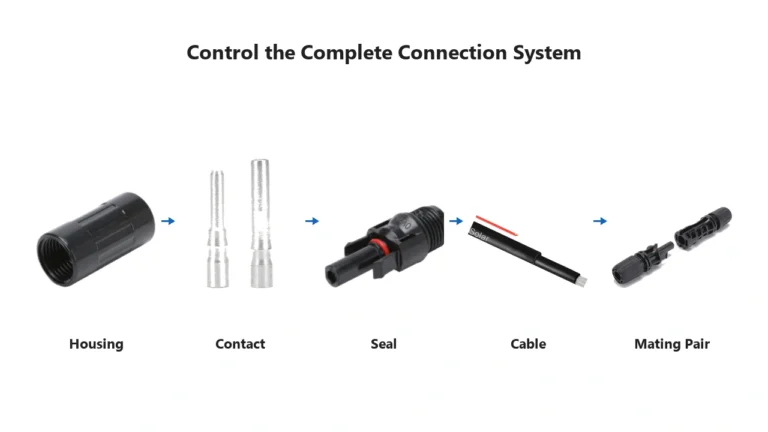
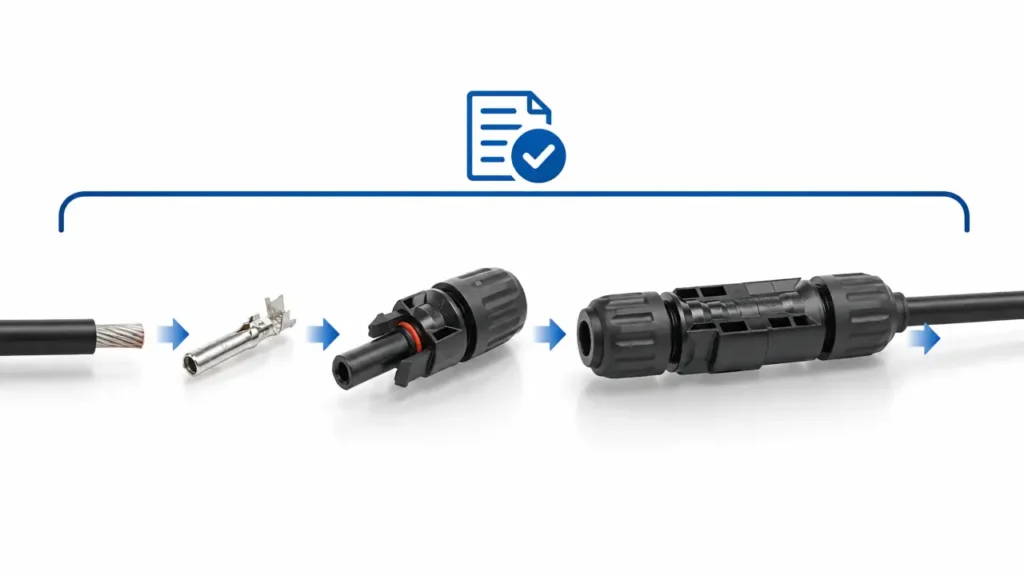
Cable, Contact and Tooling Can Be Part of the Qualified System
A field-assembled PV connector is not just a molded housing.
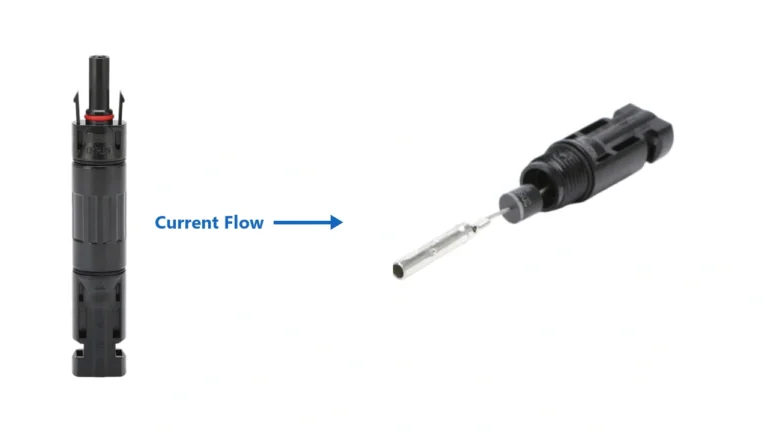
Its electrical path includes:
Cable conductor → Crimp contact → Mating contact → Cable conductor
Its sealing system also depends on:
Cable OD → Seal → Gland → Housing
Changing one component can change the resulting assembly.
This means buyers should pay attention to whether certification documentation defines:
- conductor range
- cable type
- cable OD
- contact model
- connector housing
- crimp tooling or assembly method
For field termination, see How to Crimp MC4 Connectors.
For tool selection, see MC4 Crimping Tool Guide.
IP67 or IP68 Is Not a Certification for the Whole Connector
IP ratings are frequently presented next to IEC and UL logos as though they all mean the same thing.
They do not.
An IP rating describes protection against ingress under defined test conditions.
It does not independently establish:
- connector current rating
- system voltage
- intermatability
- cable compatibility
- long-term electrical reliability
- compliance with an entire PV connector product standard
Likewise, two individually IP68-rated connectors do not automatically produce an IP68 connection when cross-mated.
The IP protection applies to the defined tested configuration.
For more detail, see MC4 Connector Specifications.
TÜV, CE and RoHS Mean Different Things
These three terms often appear together in B2B catalogs, but they describe very different concepts.
TÜV
TÜV organizations are testing and certification bodies.
A statement such as:
“TÜV certified”
should therefore be followed by:
certified to which standard, for which exact product and ratings?
“TÜV” itself is not the name of the PV connector product standard.
CE
CE marking is a conformity marking used under applicable European Union legislation.
It is not itself a PV connector test standard and should not be described as:
“CE safety certification equivalent to IEC 62852.”
Whether and how CE marking applies depends on the applicable EU legislation and product.
RoHS
RoHS concerns restrictions on certain hazardous substances in electrical/electronic products within its applicable scope.
It does not test:
- connector current
- contact resistance
- IP rating
- cable retention
- intermatability
Therefore:
RoHS compliance does not prove that a PV connector is electrically qualified for a project.
These claims can coexist on one product, but each answers a different question.
What About 2000V Solar Connectors?
2000V PV components are beginning to appear in selected high-voltage applications, but this requires particular care when discussing standards.
The current IEC 62852 scope covers connector rated voltages up to 1500 V DC.
The current UL 6703 connector scope similarly covers PV connectors rated up to 1500 V AC or DC.
Therefore, a 2000V connector should not be presented as though these standards automatically provide 2000V certification coverage.
UHCCY’s 2000V Solar Connector is a custom project product, not a standard certified production platform.
It is considered only for:
- specific projects
- defined applications
- specific countries or regions
- customer-defined technical requirements
and is manufactured on a project basis after the required specification is confirmed.
Unless corresponding certification has been obtained for the exact configuration, UHCCY should not describe the product as:
IEC 62852 certified
or:
UL 6703 certified at 2000V.
This is an example of why product rating, standard scope and certification scope must always be separated.
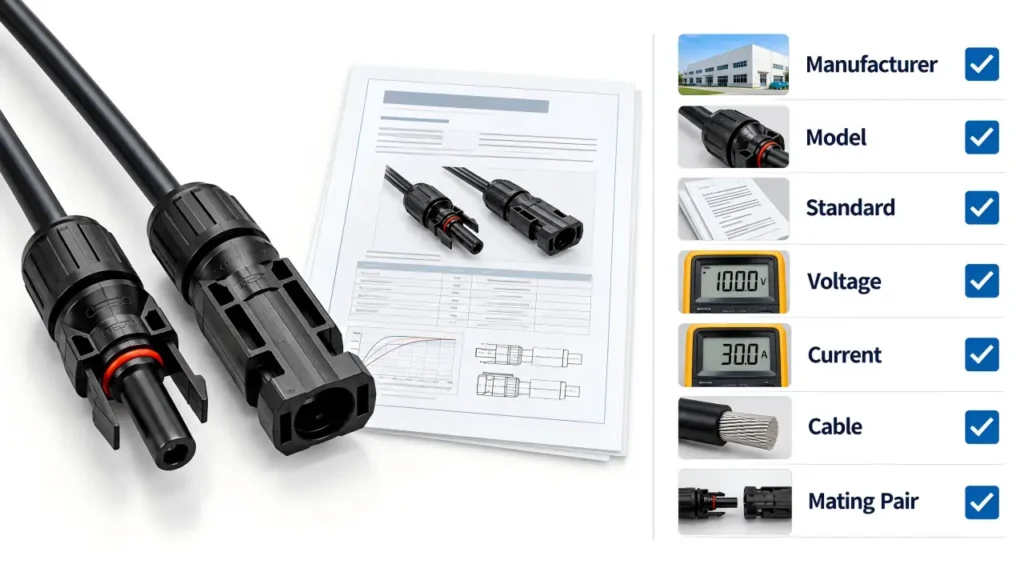
How to Verify a PV Connector Certificate Before Purchasing
For B2B procurement, do not stop when the supplier sends a PDF containing a certification logo.
Check it systematically.
1. Manufacturer
Does the manufacturer on the document match the actual manufacturer of the quoted connector?
2. Product Model
Is the exact model or product family listed?
3. Standard
Does the document identify the applicable standard and edition?
4. Ratings
Do the voltage, current and conductor ranges cover the configuration you intend to purchase?
5. Mating Components
Does the documentation define the connector pair or mating counterpart?
6. Cable Configuration
Does the approved conductor and cable range match your project cable?
7. Certificate Status
Where possible, confirm that the document is current and traceable through the issuing organization’s database.
8. Product Consistency
Does the physical sample match the drawings, markings and construction described in the documentation?
This last step is easy to overlook.
A valid certificate for one product does not help if the delivered product has changed.
Common Certification Claims Buyers Should Question
Several statements deserve additional verification.
“IEC Certified”
Ask:
Which IEC standard?
IEC publishes many standards covering different PV components.
“1500V IEC Connector”
Ask:
Was this exact model evaluated at 1500V, or is 1500V simply the upper scope of the cited standard?
“UL Connector”
Ask:
UL 6703, UL 62852, another standard, Recognition or Listing?
“TÜV Approved”
Ask:
Which certificate number and which models are covered?
“MC4 Compatible”
Ask:
Which exact mating model and what intermatability documentation supports the statement?
“IP68 Waterproof”
Ask:
In which assembled condition and under which stated test conditions?
“CE Certified”
Ask:
Which applicable EU legislation and conformity documentation supports the CE marking?
The goal is not to distrust every supplier.
It is to turn broad marketing statements into verifiable technical specifications.
A Better Compliance Specification for an RFQ
Instead of writing:
“Need CE/TÜV/UL MC4 connector.”
define what the project actually requires.
| Requirement | What to specify |
|---|---|
| Destination market | United States / EU / other |
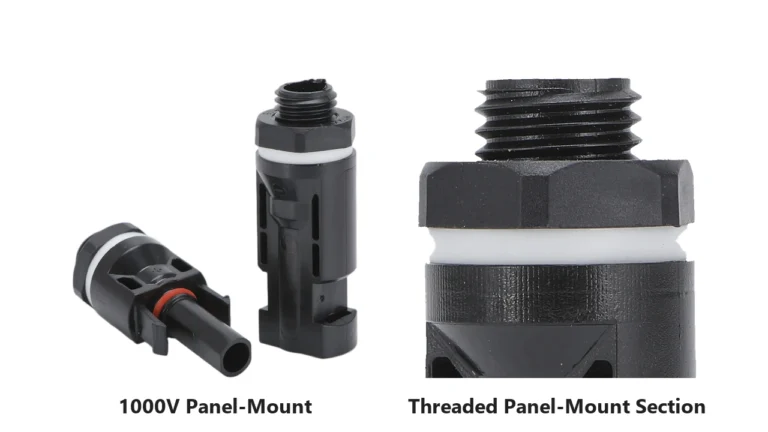
| Connector function | Inline / branch / panel-mount / other |
| System voltage | Required DC voltage |
| Required current | Project current |
| Cable | Conductor size and cable OD |
| Product standard | IEC / UL requirement where applicable |
| Mating connector | Exact required counterpart |
| Certificate | Exact model coverage required |
| Installation code | Project/jurisdiction requirements |
| Documentation | Datasheet, assembly instructions, certificate |
| Traceability | Product/batch identification requirement |
The useful order is:
Market → Project requirements → Standard → Product rating → Mating system → Certificate
not:
logo → product selection.
For available UHCCY connector configurations, start with Solar Connector and verify the documentation applicable to the exact model before specifying it for a regulated project.
Key Takeaway
PV connector compliance becomes much easier once five different concepts are kept separate:
Standard → Certification → Product Rating → Installation Code → Mating Compatibility
The most important rules are:
- IEC 62852 defines PV connector requirements; its 1500V / 125A scope is not a universal product rating.
- UL 6703 is an important North American PV connector standard and was most recently revised in 2024.
- UL 62852 is an IEC-based U.S. standard and should not simply be confused with UL 6703.
- The 2026 NEC requires stronger documentation for non-identical connector intermatability.
- Two products evaluated to the same standard are not automatically interchangeable.
- Certification belongs to defined models and configurations, not automatically to an entire supplier catalog.
- Cable, contact, tooling and mating counterpart can affect the qualified connector assembly.
- TÜV, CE, RoHS and IEC describe different things.
- 2000V products require project-specific evaluation and should not inherit 1500V certification claims.
- For purchasing, verify the certificate against the exact product being delivered.
For a professional buyer, the objective is not to collect as many compliance logos as possible.
It is to make sure the actual connector configuration being purchased is supported by the documentation required for the actual project.