Table of Contents
Electrical cabinet fire suppression is an additional protective measure for electrical distribution boards, industrial control panels and other equipment enclosures where an internal fire could damage critical components.
However, fire suppression is not the same as electrical fault protection. A circuit breaker may interrupt an overload or short circuit, but it cannot extinguish an established fire. Likewise, an automatic extinguishing device cannot correct a loose connection, damaged insulation or overheating component.
A practical protection strategy combines electrical safety, early detection where required, and appropriate suppression methods.
For compact electrical enclosures, aerosol fire suppression is one option worth evaluating, provided the device and installation are suitable for the actual fire hazard.
What Causes Fires Inside Electrical Cabinets?
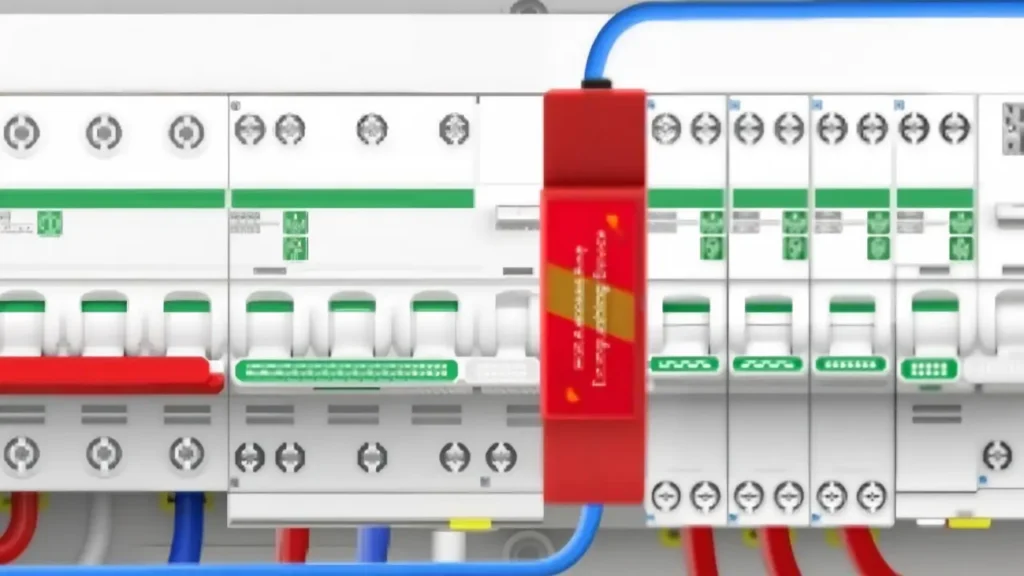
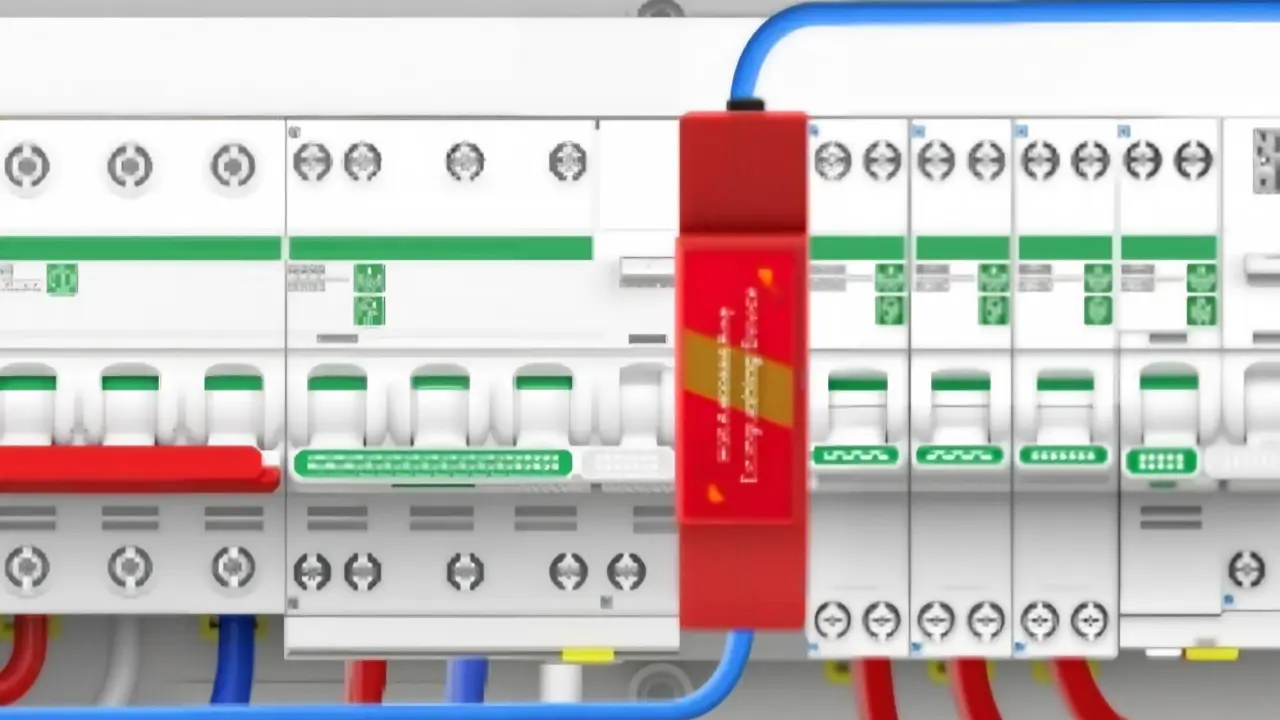
Electrical cabinets contain switching devices, terminals, conductors, protective equipment and sometimes electronic control components. Several conditions can create localized overheating or ignition.
Loose Connections and Contact Resistance
Poorly tightened or deteriorated electrical connections can develop increased contact resistance.
When current flows through a resistive connection, heat is generated at the contact. Under unfavorable conditions, the temperature can rise sufficiently to damage insulation or surrounding materials.
This type of deterioration may develop without producing enough excess current to operate a conventional overcurrent protective device.
Overloads and Short Circuits
Overloaded conductors and short circuits can generate substantial heat.
Correctly selected circuit breakers and fuses help limit the effects of specified electrical faults. Their performance depends on the circuit configuration, device ratings, fault characteristics and installation conditions.
Other Contributing Conditions
Additional factors may include:
- Damaged or aging insulation
- Incorrectly sized conductors
- Poor ventilation and excessive internal temperatures
- Contamination, moisture or corrosion
- Improper component installation or maintenance
Fire suppression should not be used to compensate for these underlying problems.
Fire Prevention, Detection and Suppression: Three Different Tasks
A well-designed electrical cabinet may require several layers of protection. Each layer addresses a different part of the risk.
| Protection Layer | Typical Measures | Main Purpose |
|---|---|---|
| Prevention | Correct wiring, suitable protective devices, thermal management and maintenance | Reduce the likelihood of ignition |
| Detection | Temperature monitoring, smoke detection or other suitable detection systems | Identify abnormal conditions or fire development |
| Suppression | Approved extinguishing systems or devices | Control or extinguish a fire within their evaluated application |
These measures are complementary.
For example, an appropriately rated circuit breaker can interrupt certain fault currents, while a cabinet fire suppression device addresses a different problem: an ignition that has already occurred.
The choice of suppression technology depends on the cabinet volume, internal equipment, ventilation, expected fire characteristics and relevant regulations.
How Does Condensed Aerosol Fire Suppression Work?
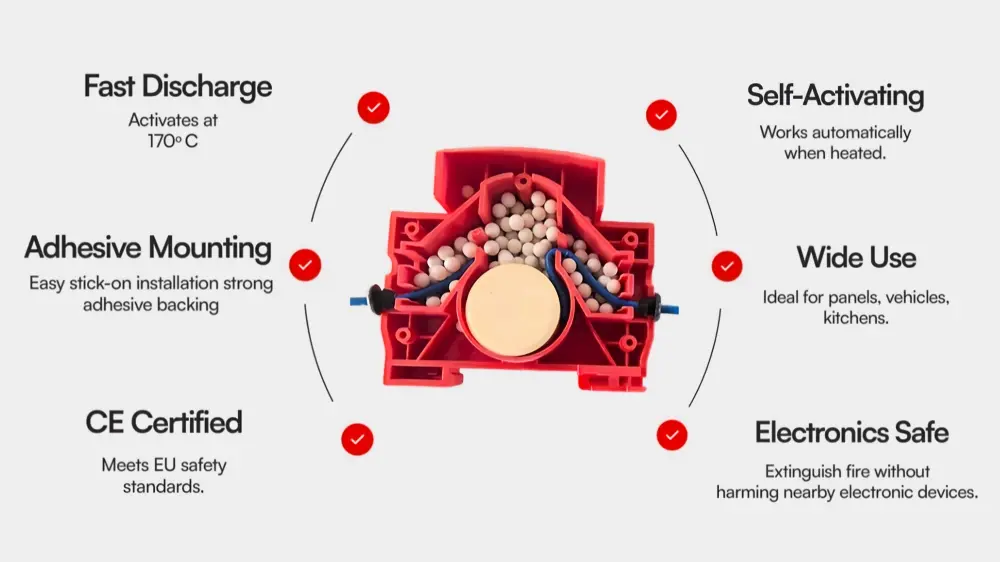
A condensed aerosol fire extinguishing device uses a solid aerosol-forming compound to generate a fire-suppressing aerosol when activated.
The released aerosol can interfere with combustion reactions, helping suppress flames under suitable conditions. The actual extinguishing performance depends on the formulation, tested fire hazards, application density and distribution within the protected space.
Unlike stored-pressure extinguishers, condensed aerosol generators produce their extinguishing medium during activation rather than storing it as a pressurized agent.
Heat-Activated Aerosol Devices
Some compact devices incorporate thermal activation mechanisms.
When the specified activation conditions are reached, the mechanism initiates aerosol generation without requiring an operator to manually discharge the device.
The activation method does not eliminate the need to assess the installation. The device must be positioned and used according to its intended design, tested performance and manufacturer instructions.
For small electrical cabinets, compact size can make this technology attractive where installation space is limited. However, it does not establish suitability for every cabinet.
Where Can Small Aerosol Devices Be Used?
Potential applications include compatible enclosed electrical equipment spaces such as:
- Electrical distribution cabinets
- Industrial control panels
- Small electrical equipment enclosures
- Suitable solar combiner box compartments
These are potential application categories, not universal approvals.
A cabinet with extensive ventilation openings, internal partitions, obstructed discharge paths or unsuitable fire hazards may not achieve the conditions required for effective aerosol suppression.
UHCCY offers the UH-ES-AFD01 heat-activated aerosol fire extinguishing device for evaluation in suitable small electrical enclosures.
The product page provides model-specific information, while supporting test documentation can be requested for technical review.
Limitations of Electrical Cabinet Fire Suppression
An automatic electrical cabinet fire extinguisher should not be selected solely because it is compact or has a particular nominal protection volume.
Several limitations require attention.
Enclosure Openings and Internal Obstructions
Openings and leakage paths can affect aerosol retention and distribution.
Partitions, cable ducts, closely packed equipment and other obstructions may also interfere with the required distribution of extinguishing medium.
Discharge Temperature and Clearance
Condensed aerosol generators can produce substantial heat during operation.
Mounting clearance, discharge direction and the distance from nearby materials must be evaluated using the documentation applicable to the specific device.
Fire Type and Hazard Characteristics
Not every fire hazard is suitable for condensed aerosol suppression.
In particular, successful suppression of flames should not be interpreted as proof that a device can stop lithium-ion battery thermal runaway, prevent an explosion or eliminate all risks of reignition.
Post-Discharge Conditions
Aerosol discharge can affect visibility and leave particulate deposits. Equipment inspection, cleaning and necessary electrical repairs may be required before returning a cabinet to service.
Actual post-discharge requirements depend on the extinguishing formulation, equipment and exposure conditions.
Standards and Test Documentation
Two European standards are particularly relevant to condensed aerosol extinguishing systems.
EN 15276-1:2019 addresses requirements and test methods for condensed aerosol extinguishing system components.
The scope of this standard can be reviewed through the EN 15276-1:2019 standard overview.
EN 15276-2:2019 addresses the design, installation and maintenance of condensed aerosol extinguishing systems.
Further information is available from the EN 15276-2:2019 standard overview.
The distinction matters: component testing does not automatically demonstrate that every complete installation satisfies applicable system design requirements.
The corresponding UHCCY AFED product configuration has third-party EN 15276-1:2019 test documentation available for review.
Buyers should confirm the tested model, scope of testing, actual installation conditions and applicable destination-market requirements before treating a device as suitable for a project.
How to Evaluate Fire Suppression for an Electrical Cabinet
Before considering a compact aerosol device, the following questions should be addressed:
- What is the fire hazard? Identify the electrical equipment, materials and plausible ignition sources.
- What are the enclosure conditions? Check internal dimensions, openings, ventilation and obstructions.
- What protection is already installed? Review circuit protection, thermal management and applicable detection systems.
- Does the device match the application? Confirm its documented operating limits, fire performance and installation requirements.
- What regulations apply? Determine whether additional system approvals or project-specific documentation are required.
- What happens after activation? Consider safe isolation, inspection, replacement and restoration of the equipment.
The correct choice is not necessarily the smallest or least expensive extinguishing device. It is the solution that is supported by suitable performance evidence and compatible with the actual enclosure.
For compact electrical equipment applications, UHCCY can provide information about the UH-ES-AFD01 and its available test documentation.
When requesting technical details, specify the enclosure type, intended application and destination market so the relevant requirements can be reviewed.