How Does Condensed Aerosol Fire Suppression Work?
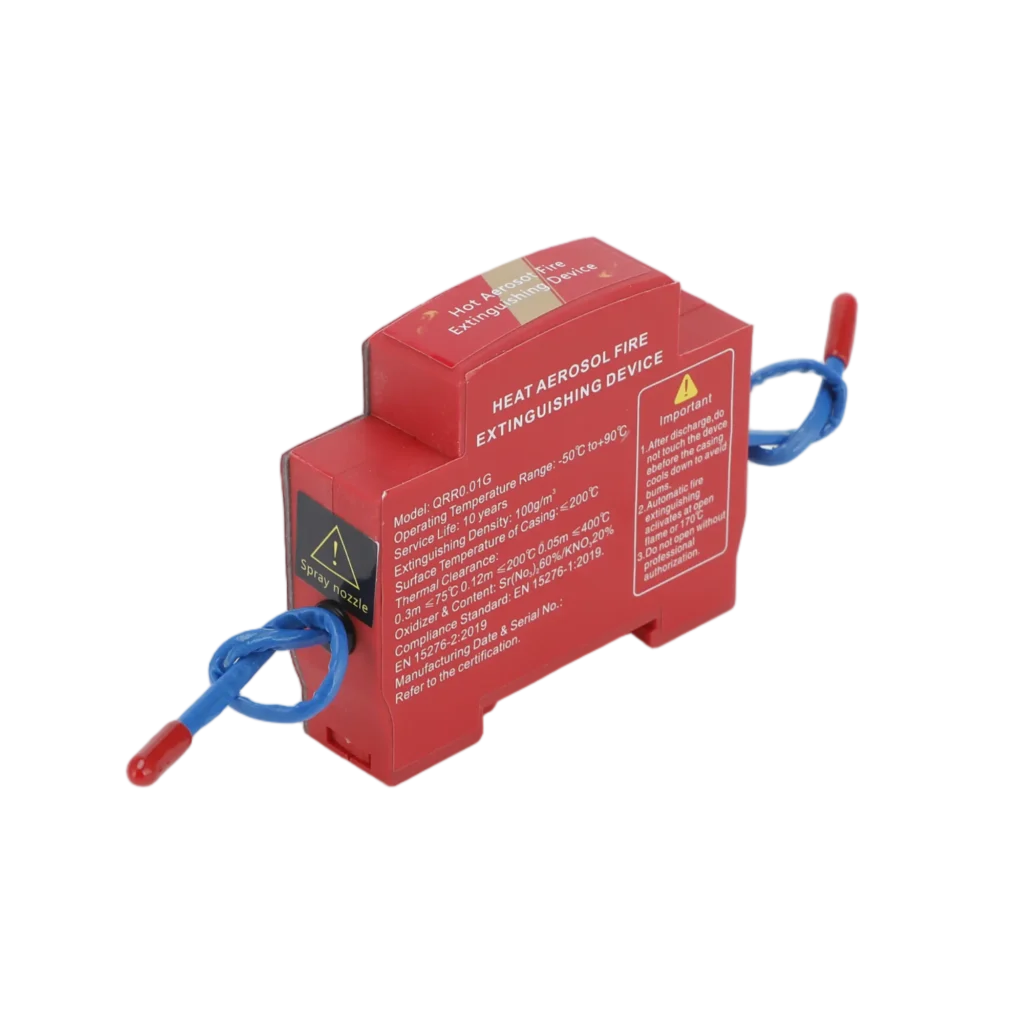
A condensed aerosol fire suppression device contains a solid aerosol-forming compound. When the activation mechanism operates, the compound generates a fire-suppressing aerosol that is discharged into the protected space.
Unlike conventional stored-pressure extinguishers, a condensed aerosol generator does not rely on a pre-pressurized agent cylinder. The suitability and effectiveness of a device depend on its tested characteristics and the conditions inside the protected enclosure.
Applications in Electrical Cabinets
Small electrical cabinets may contain switching devices, terminals, wiring, control components and other potential heat sources. Aerosol fire suppression can be considered as an additional protective measure in suitably evaluated enclosed spaces.
Potential applications include electrical distribution cabinets, industrial control panels and compatible PV combiner boxes. The presence of electrical equipment alone does not establish that an aerosol device is suitable for a particular installation.
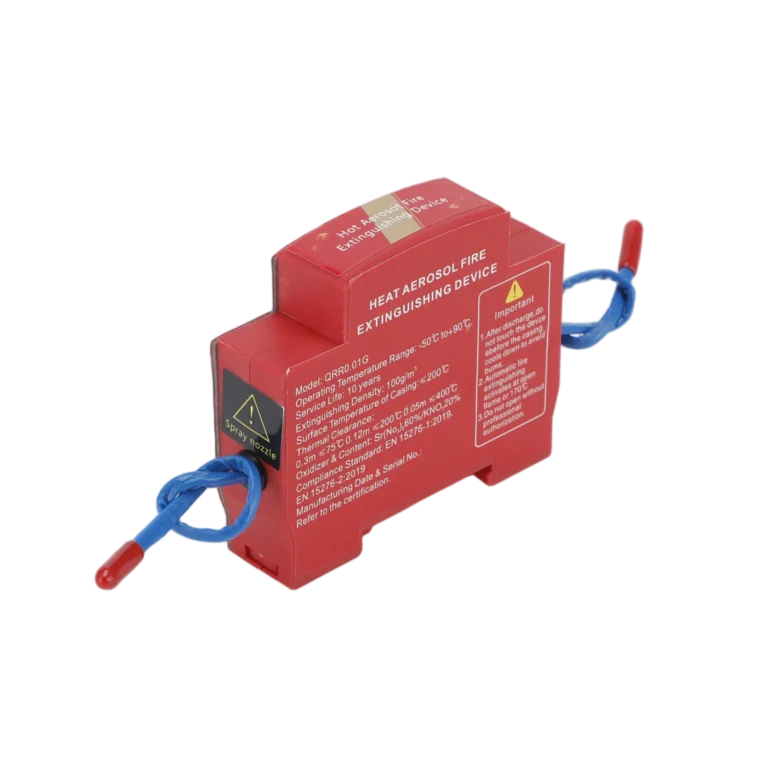
Heat-Activated Aerosol Devices
Heat-activated designs initiate aerosol generation when their specified thermal activation conditions are met. Installation requirements, enclosure volume, internal obstructions and environmental conditions must be considered before use.
UHCCY offers the UH-ES-AFD01 aerosol fire extinguishing device for evaluation in small enclosed electrical equipment applications. Refer to the product page for model-specific details and documentation.
Aerosol fire suppression is supplemental protection and does not replace required circuit protection, fire detection or other applicable fire-safety measures.